Biomedical electrospinning

TL-BM-C

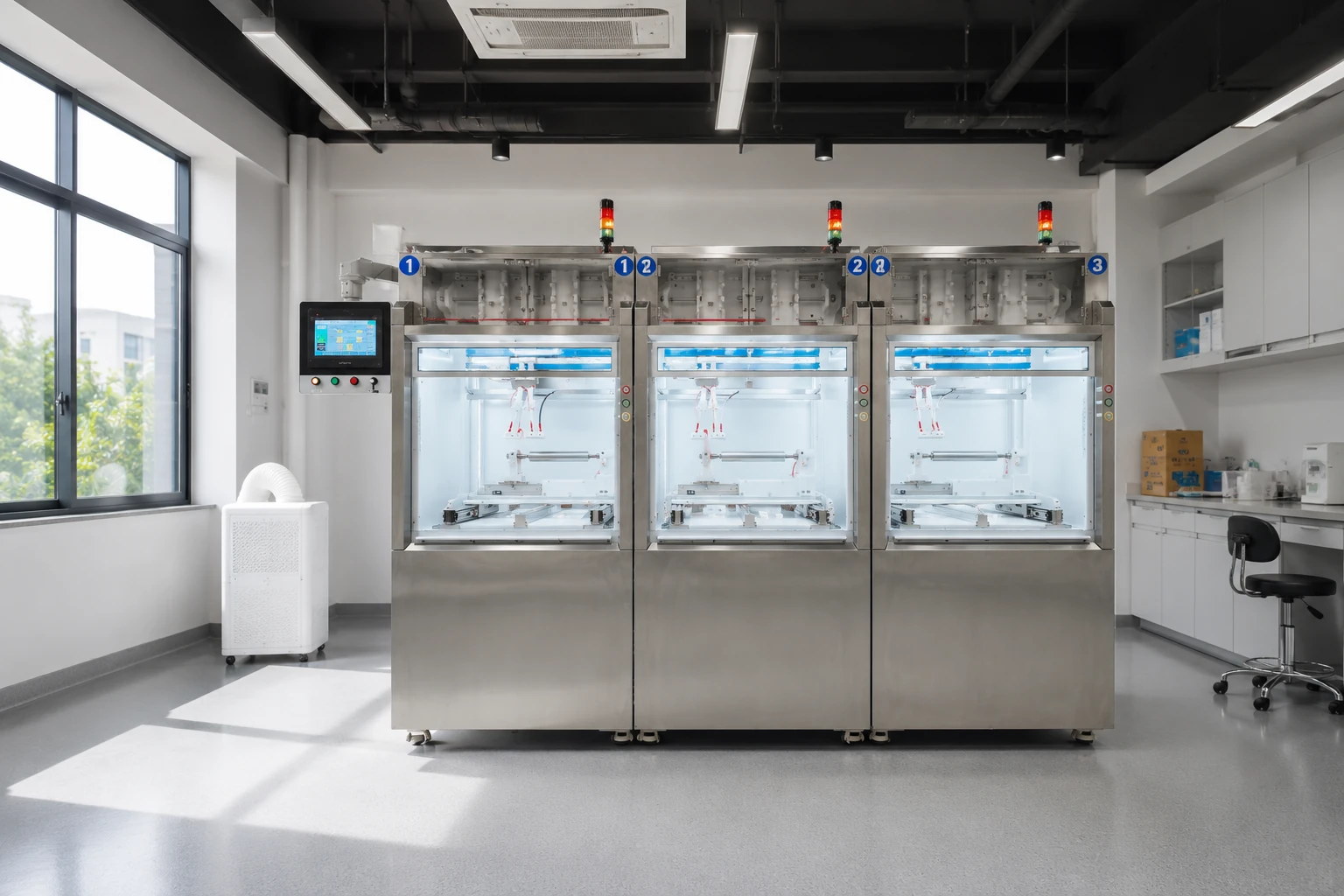
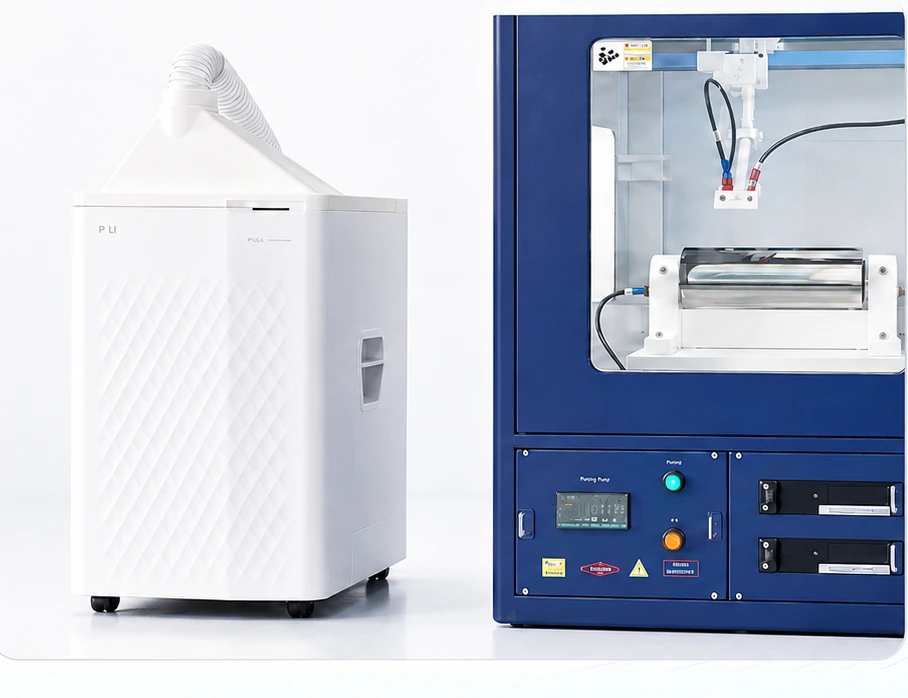
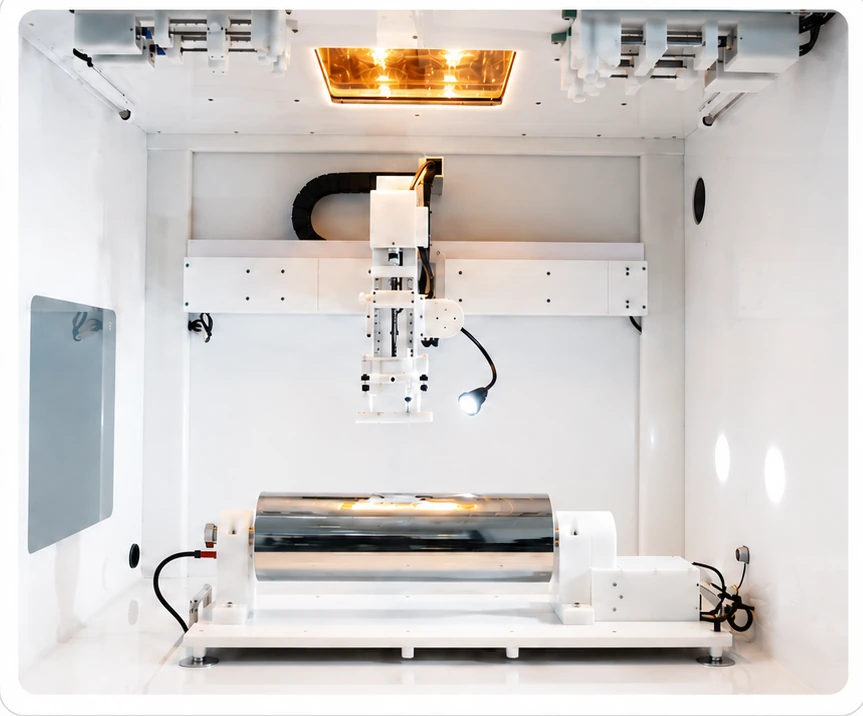
Custom biomedical production line

Combine electrospinning, melt electrowriting and ultrasonic spraying with coordinated equipment and centralized process data.

Choose your TL-BM platform

Compare sample dimensions, process combinations and production scale.

The modules below describe the configuration and expansion options of the TL-BM series. Spinnerets, motion travel, collectors and process modules must match the selected model. They are not all standard equipment on every system.

TL-BM-C · Platform capabilities

  • Production workflow designed around your material and process
  • Electrospinning, melt electrowriting, ultrasonic spraying and other modules
  • Coordinated systems for continuous production
  • Centralized process data and traceability
  • Expansion interfaces for future line upgrades
01

Models & applications

Biomedical research and production

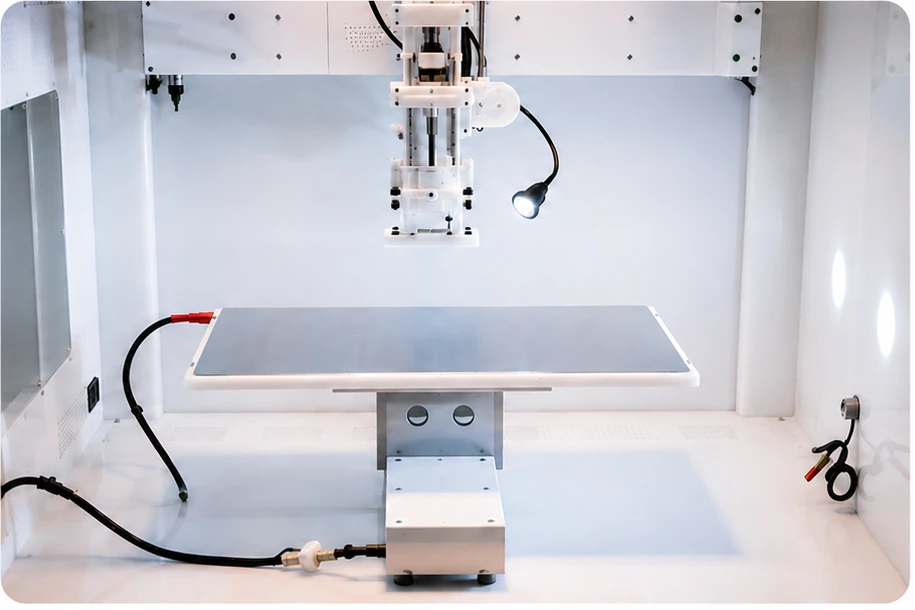
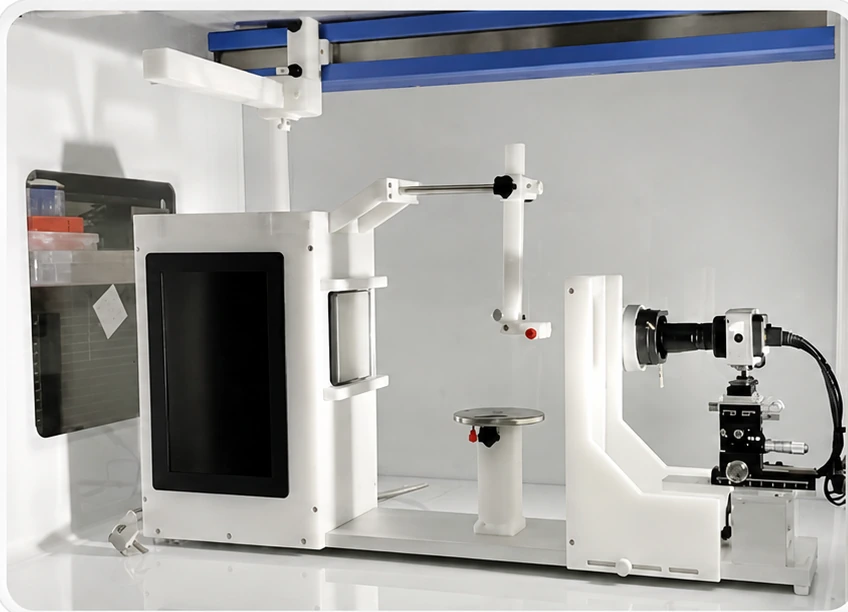
  • Stainless-steel construction supports clean laboratory and biomedical production environments.
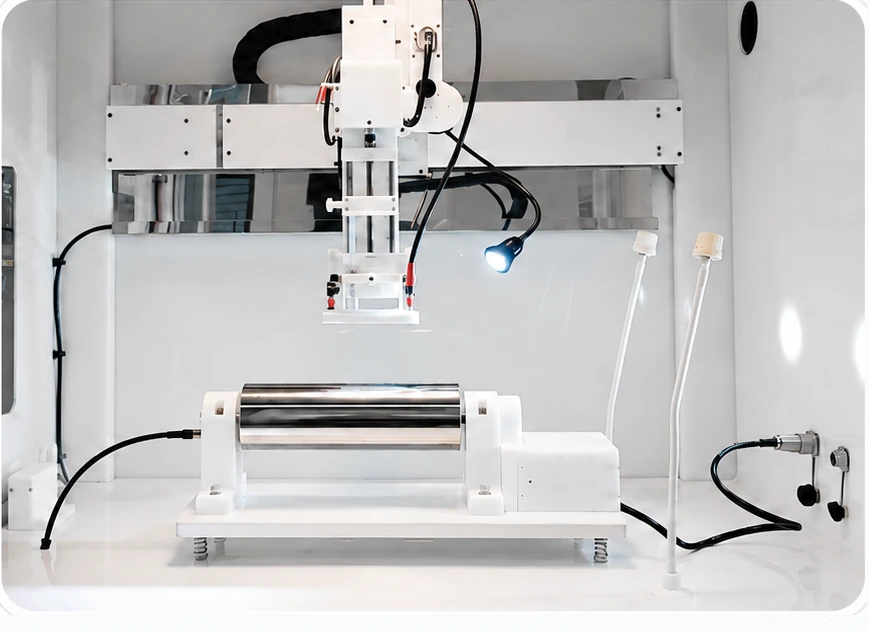
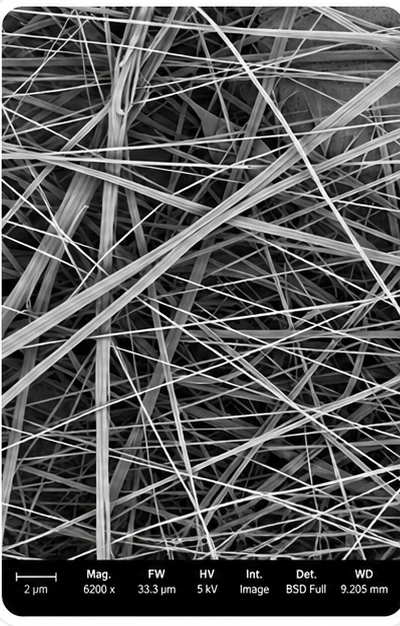
  • Modular spinnerets and collectors support flat, tubular, multilayer and complex fiber structures.
  • Coordinated control and parameter records support repeatable process development and scale-up.

Biomedical applications

  • Neural repair: dural substitutes, nerve conduits, CSF barriers and neural scaffolds.
  • Biological barriers: anti-adhesion membranes, guided tissue regeneration and wound isolation.
  • Vascular structures: grafts, repair membranes and stent coatings.
  • Tissue repair: corneal, pericardial, soft-tissue and periosteal membranes.
  • Gastrointestinal and urinary repair: hernia, bladder and intestinal membranes.
  • Skin: wound and scar repair materials and tissue-engineering scaffolds.

Configuration overview

Module ranges below are configuration options. Final specifications are agreed for the selected model, material and process.

ParameterSpecification
Clean enclosureSS304 / SS316 stainless-steel construction, by configuration
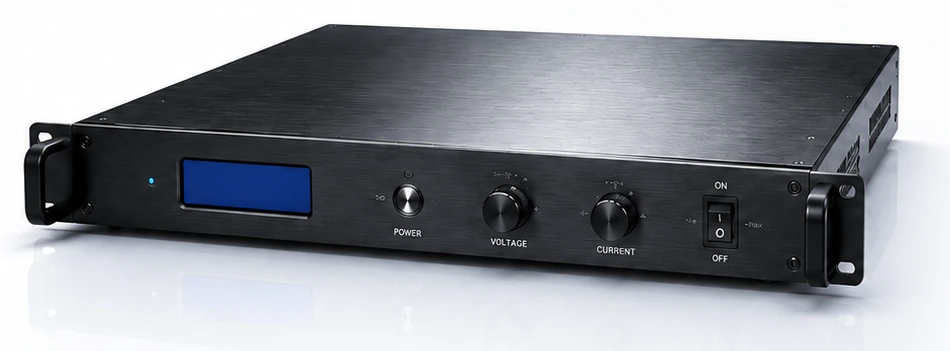
Bipolar high voltagePositive 0–30 kV; negative −30–0 kV. Supply count and polarity by process.
Servo feeding options2–16 independent channels; 0.02–99.99 mL/h; 0.01 mL/h resolution. Theoretical maximum thrust: 353 N.
Heating & humidityAmbient to 45°C. Humidification and dehumidification modules selected for the process; standard dehumidification reaches approximately 30% RH.
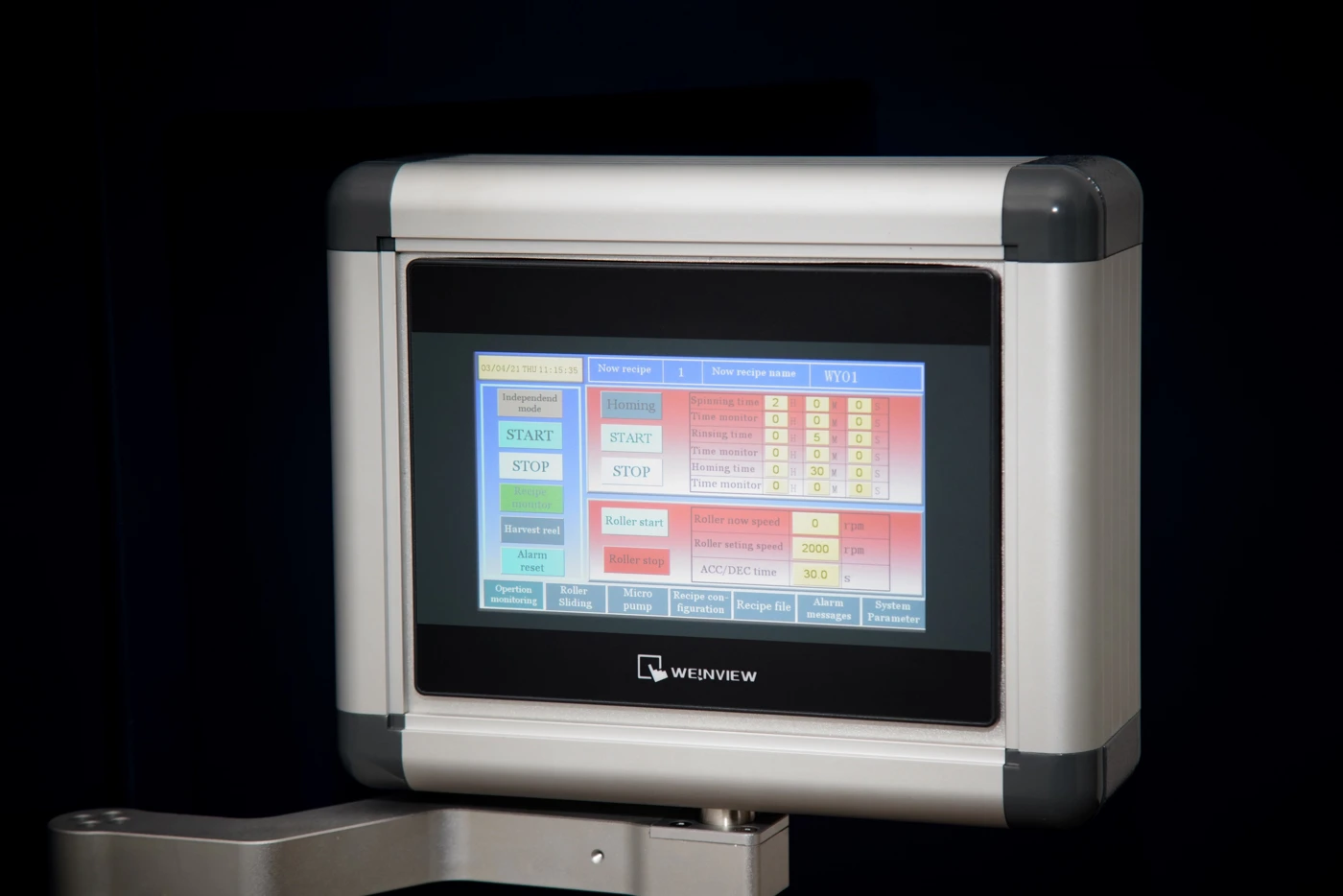
Process controlTouchscreen and physical controls; recipe recall, parameter logging, storage and export.
Fiber collectionFlat and tubular membranes, aligned fibers, yarns and 3D structures; collector dimensions and speeds depend on the module.
02

Feeding & environment

Positive and negative HV supplies

  • Independent positive and negative outputs support different spinneret arrangements.
  • One negative and multiple positive supplies can be configured.
  • Voltage monitoring and automatic compensation support stable output.

Intelligent process control

  • Coordinate HV, feeding, motion and environmental settings through a touchscreen and physical controls.
  • Adjust parameters during operation.
  • Recall recipes and record, store and export process data.

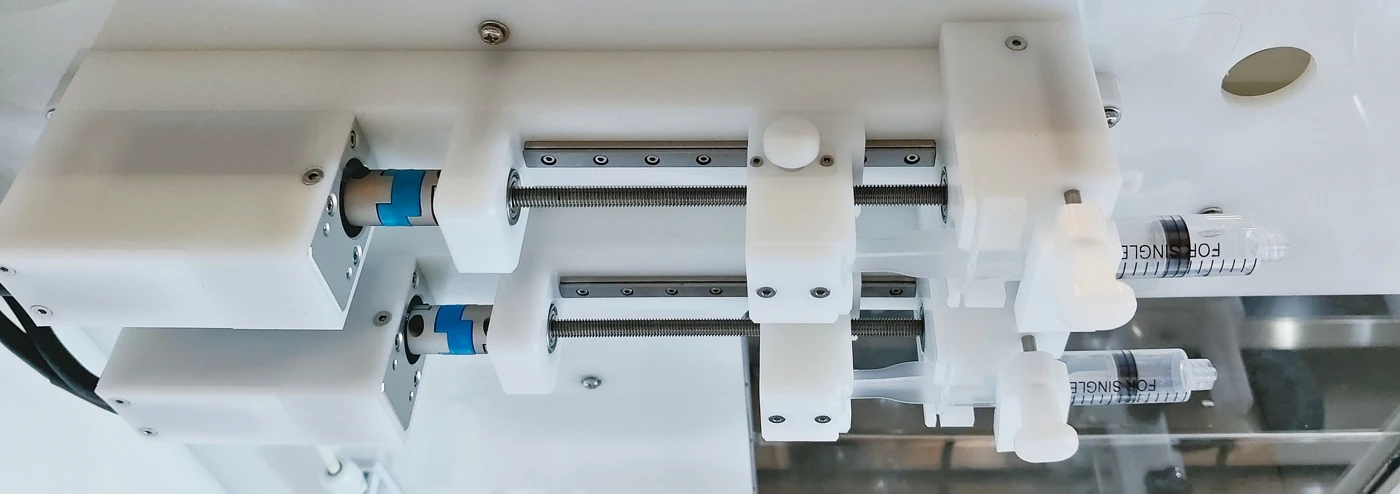
Multichannel servo syringe pump

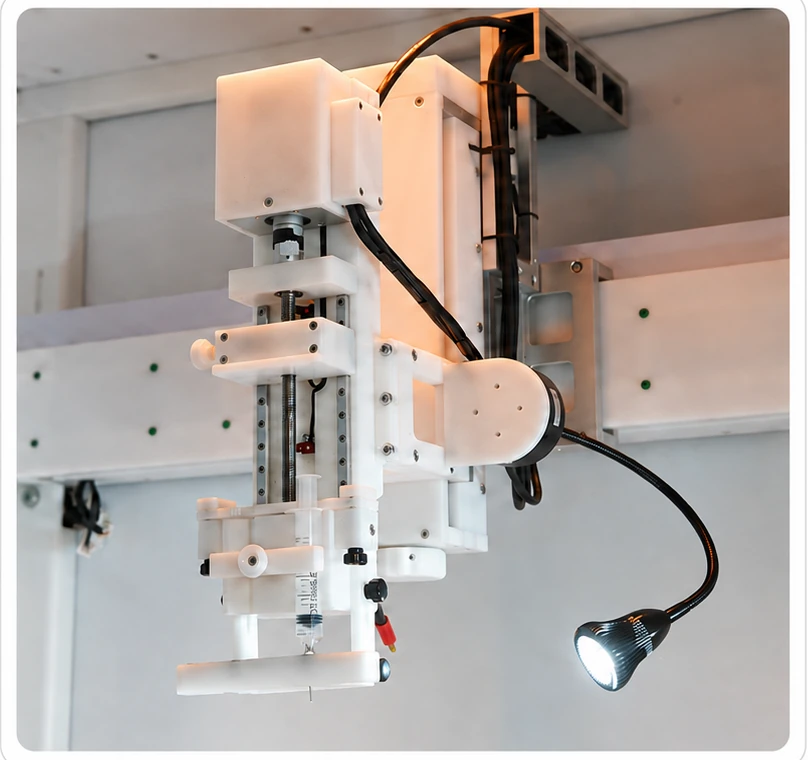
  • Independently programmable channels with servo drives for stable delivery.
  • High-thrust design accommodates high-viscosity solutions.
  • HV-resistant insulation and an expandable channel count support different material systems.

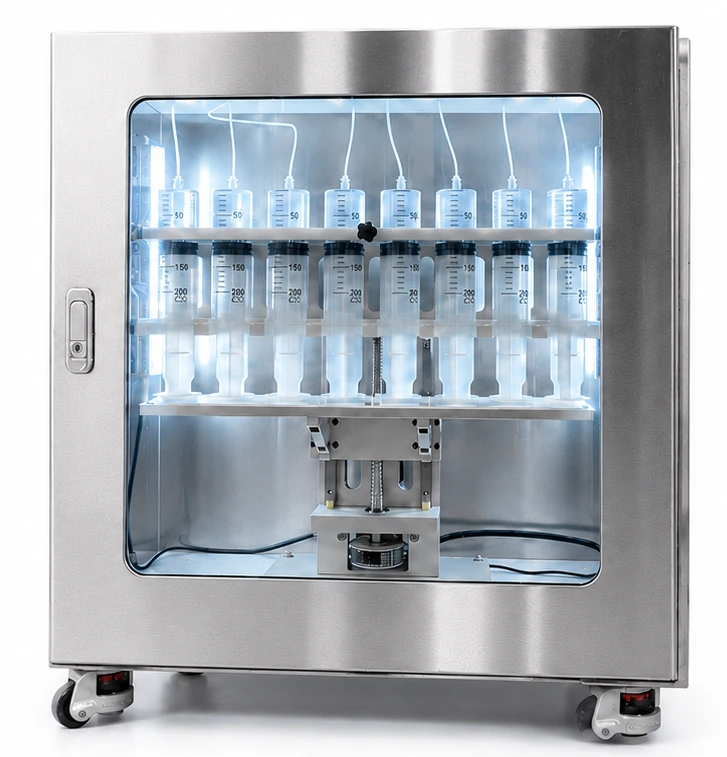
External high-capacity syringe pump

  • Higher-capacity feeding supports long runs and pilot or production-scale operation.
  • Coordinated channels and flexible external installation adapt to the process and available space.

Programmable syringe pump

  • Flow range: 0.01–99.9 mL/h.
  • 10 mL and 20 mL syringes; 50 mL and other sizes configurable.
  • 99 flow-rate steps and 99 individually named programs.
  • 7-inch touchscreen for complex feeding sequences.

Humidity control

  • Process range up to 20–80% RH with selected humidification and dehumidification modules.
  • Standard dehumidification reaches approximately 30% RH at room temperature; enhanced dehumidification approximately 20% RH.
  • Mist-free humidification limits droplet deposition. Performance depends on site and process conditions.

Dust-free heating

  • Continuously adjustable from ambient temperature to approximately 45°C.
  • An external heat source supports uniform chamber heating without disturbing the electrostatic field.
  • Additional zones can control spinneret and collector temperatures.

Heated rotating collectors

  • Optional independent heating: mandrels up to approximately 60°C and drums up to approximately 140°C.
  • Select heating for low-volatility solvents, specialty materials and heated collection processes.
03

Spinnerets & motion

Modular spinneret platform

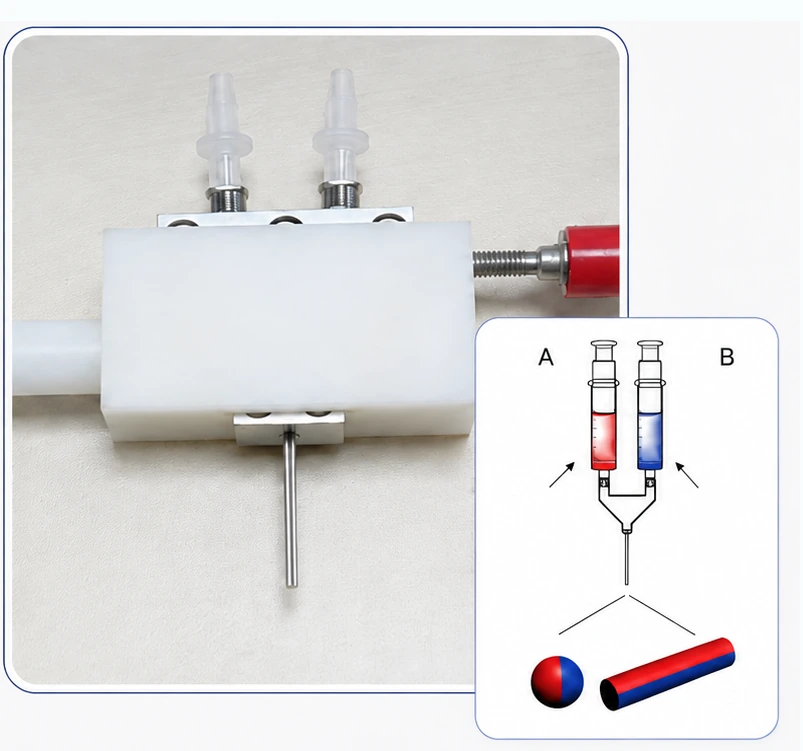
  • Parallel and side-by-side heads for dual-material delivery.
  • Coaxial and triaxial heads for multilayer fibers.
  • Two- or three-channel sea-island configurations.
  • Near-field solution writing and melt electrowriting.
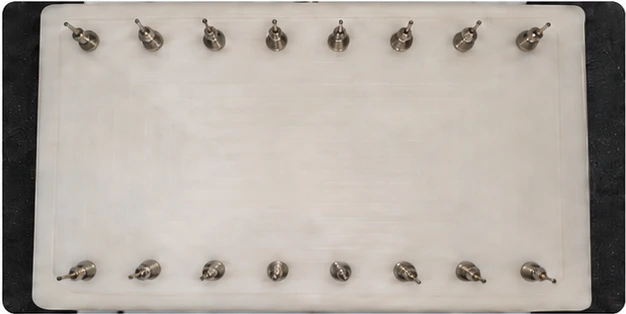
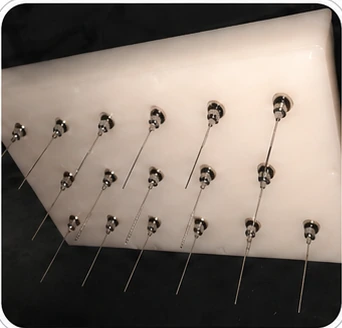
  • V-shaped, linear, circular and matrix arrays.
  • Optional gas-assisted, centrifugal and ultrasonic modules.

Low-volume spinnerets

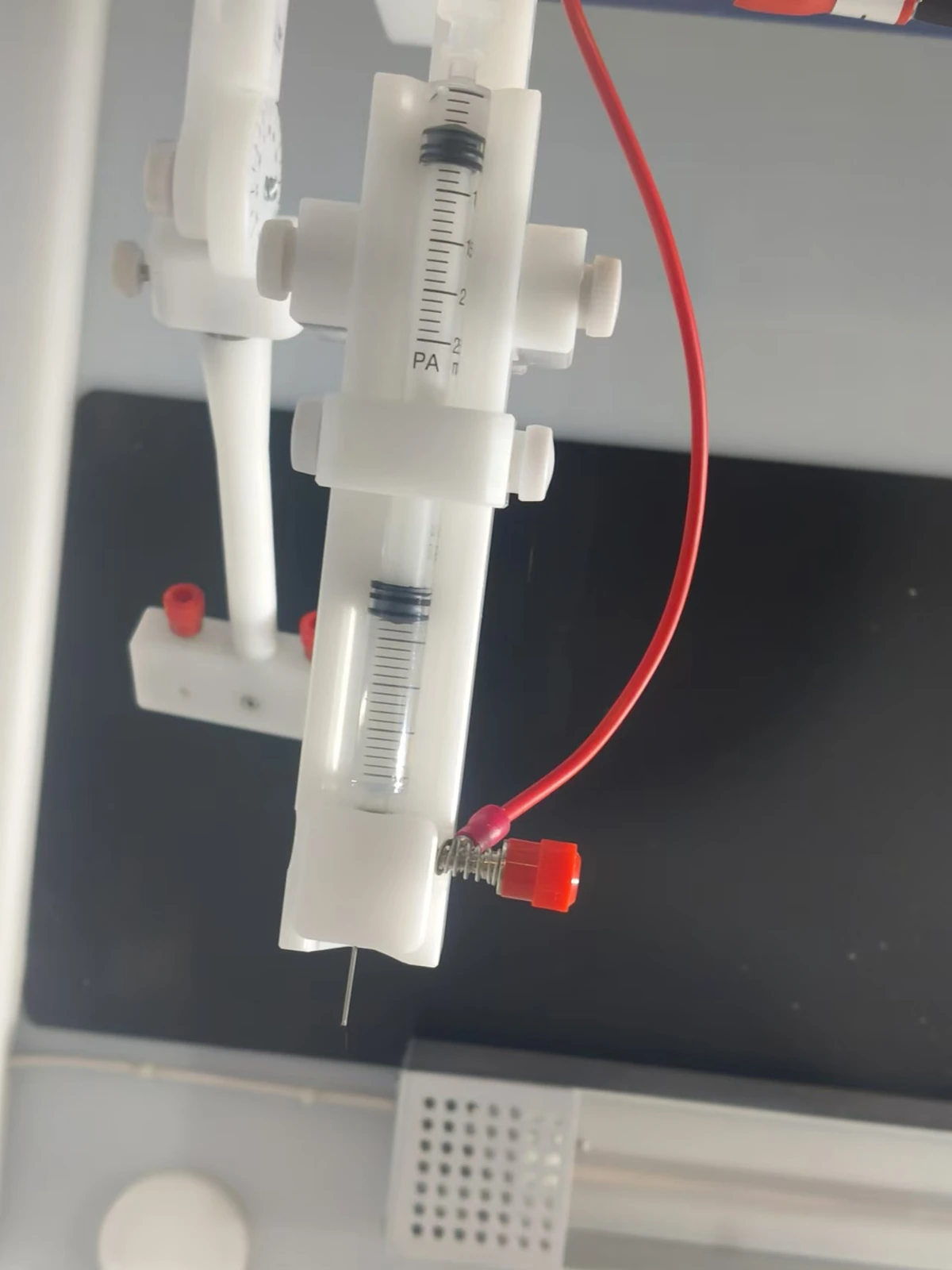
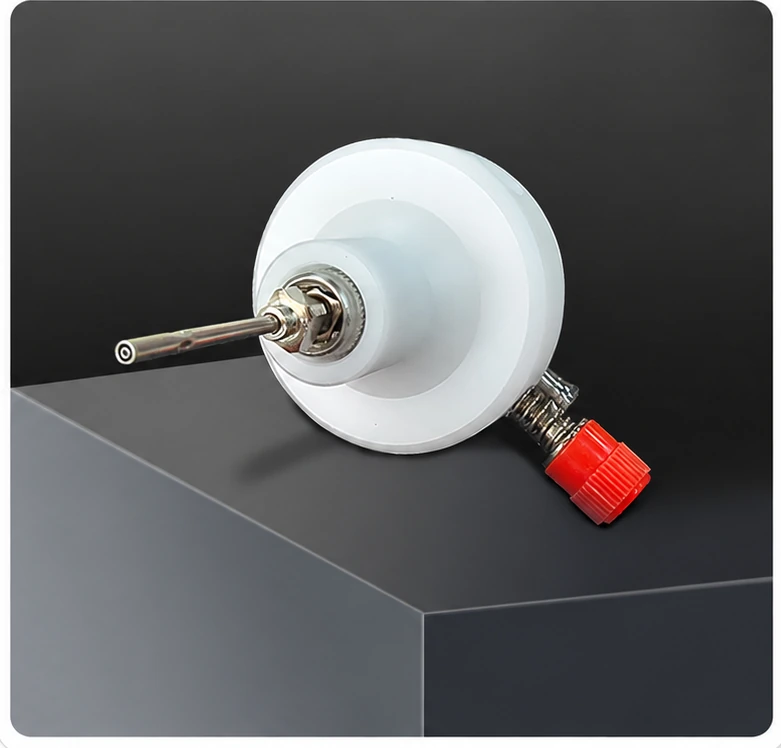
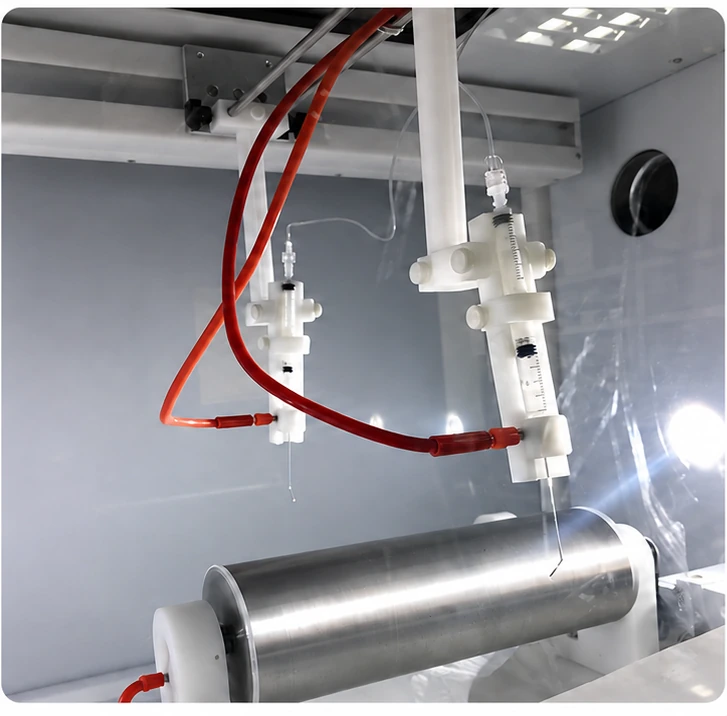
  • Direct syringe-to-needle connection eliminates tubing and reduces material use.
  • Trials can use 0.5 mL of solution.
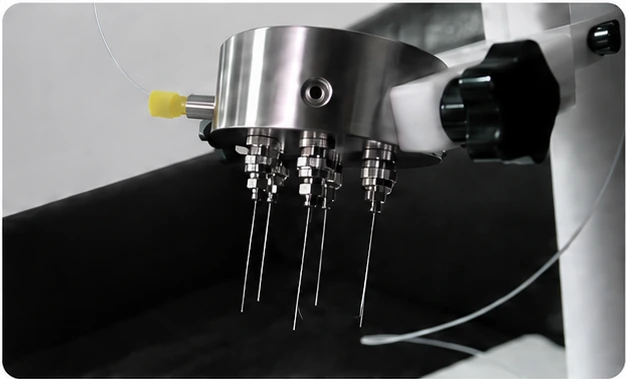
  • Optional configurations support 2–4 low-volume spinnerets simultaneously.

Coaxial spinnerets

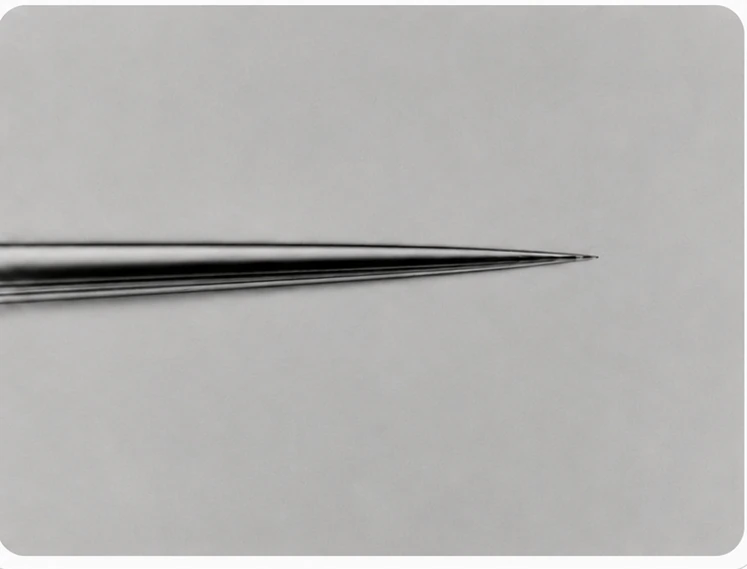
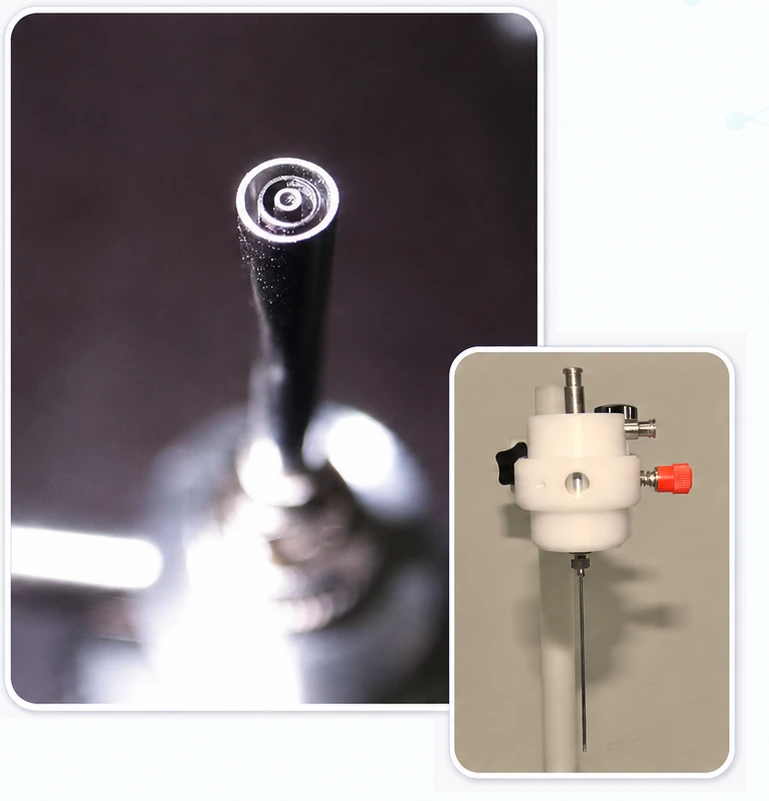
  • Concentric inner and outer needles form core–shell fibers.
  • Interchangeable sizes and independently removable needles simplify replacement.
  • Connections can be configured for gas assistance.

Circular and array coaxial spinnerets

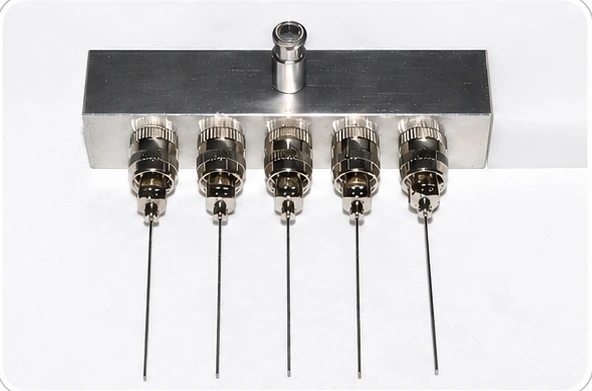
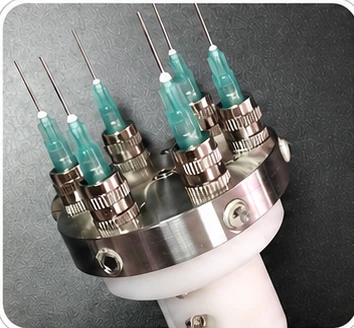
  • Parallel coaxial jets increase core–shell fiber output.
  • Circular or matrix layouts and needle spacing are selected for output and electric-field interaction.
  • For pilot expansion and continuous composite-fiber production.

Triaxial spinnerets

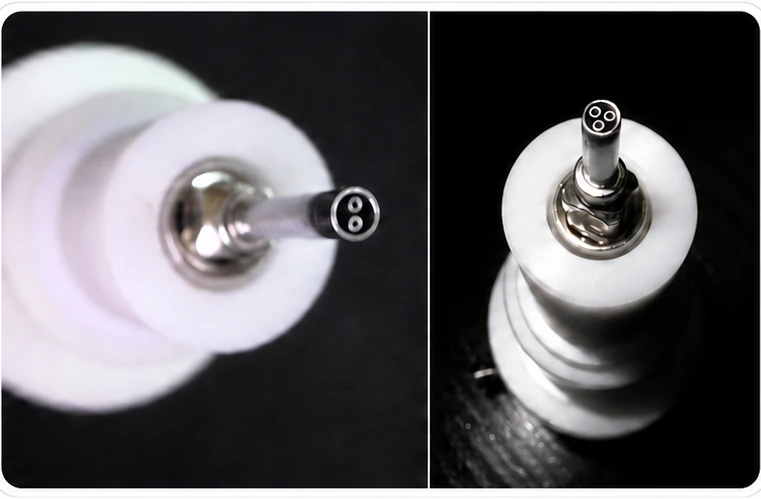
  • Three independently supplied concentric channels form multilayer fibers.
  • Modular needle combinations support different core and shell dimensions.
  • For multilayer drug-delivery and functional-fiber research.

V-array multi-needle spinnerets

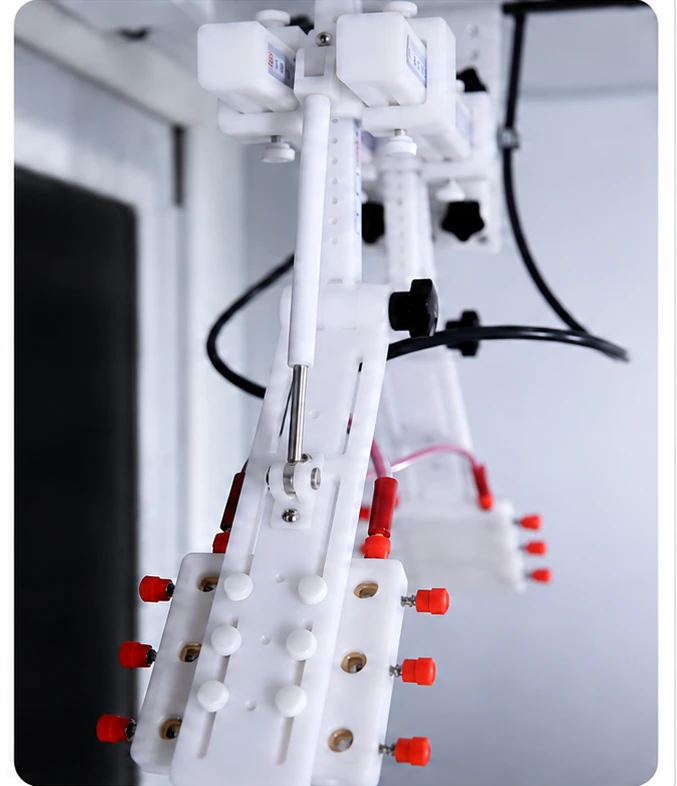
  • Adjustable spinneret angles and spacing support parallel multi-jet operation.
  • The two sides can receive different positive HV settings.
  • Conjugate and combined spraying/spinning arrangements depend on the selected supplies and modules.

Conjugate electrospinning

  • Positive and negative jets operate together for specialty fiber structures and two-material spinning.
  • Coordinated polarity helps manage charge accumulation and inter-spinneret interaction.

Sea-island spinnerets

  • Two- and three-channel designs provide independently controlled material feeds.
  • Produce sea-island, cable-like and other multicomponent fiber cross-sections with the selected channel arrangement.

Automatic needle cleaning

  • Clean needles during spinning without stopping the system.
  • Adjust cleaning frequency to solvent volatility.
  • Combine reciprocating motion and cleaning for long runs with volatile solvents.

Spinneret motion system

  • Series motion option: approximately 600 mm X travel at 1–40 mm/s and approximately 200 mm Z travel.
  • Acceleration and deceleration settings can be recalled.
  • Optional Y motion enables coordinated three-axis operation. Travel must match the chosen model.
04

Fiber collection

Fiber collection systems

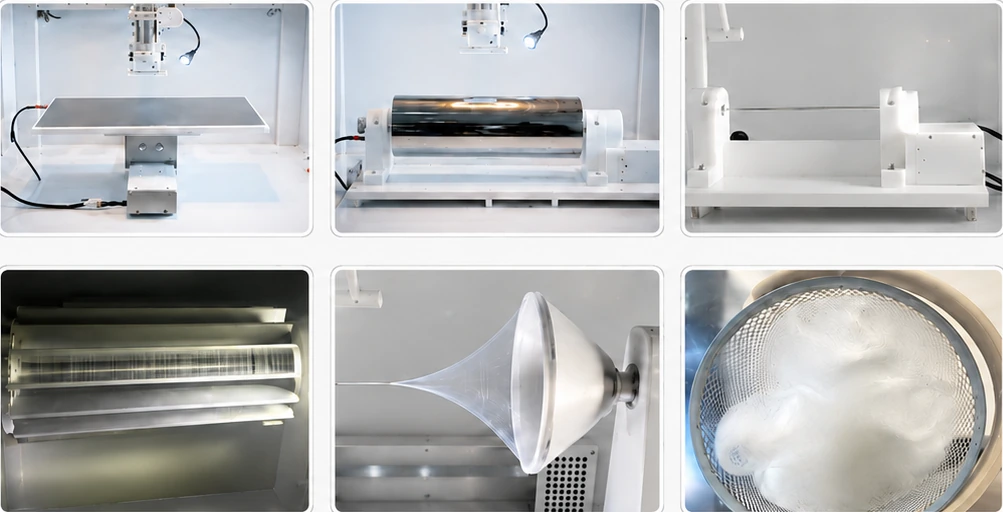
  • Choose collectors for flat or tubular membranes, aligned fibers, microfilaments, yarns and thick porous mats.
  • Continuous webs, patterned deposition and multilayer 3D structures require matching collection and motion modules.

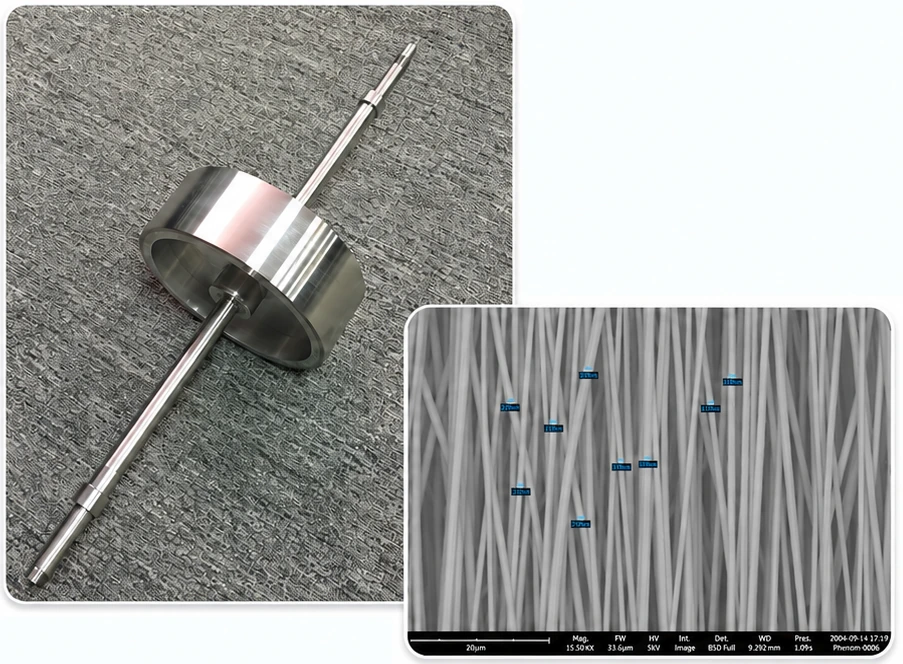
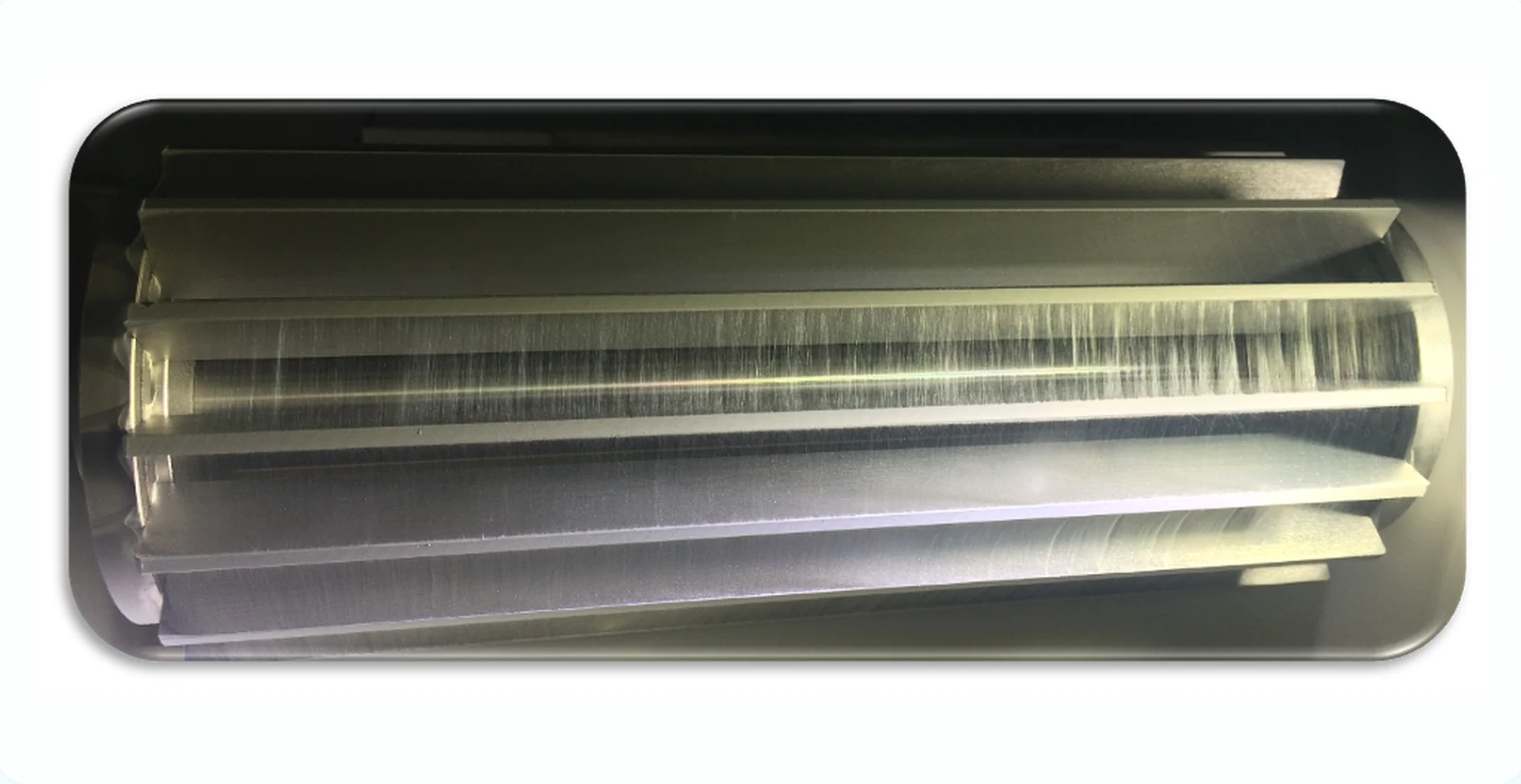
Large-area rotating drums

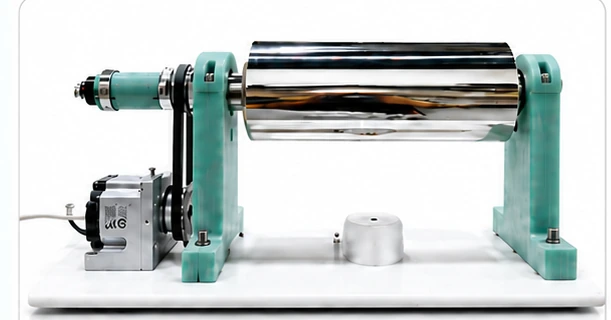
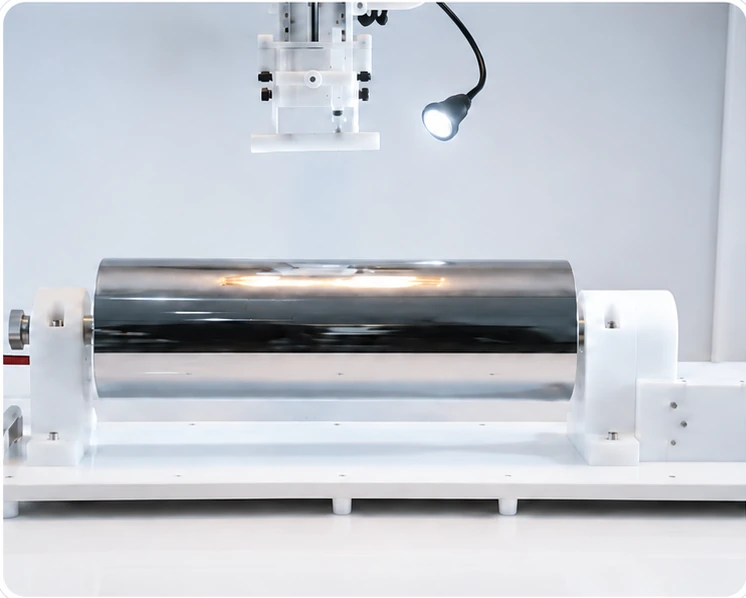
  • Series options: Ø159 × 500 mm at 1–600 rpm (±1 rpm); Ø100 × 300 mm at 1–500 rpm (±1 rpm); Ø219 × 700 mm.
  • Select drum dimensions and drive for the model and sample. Custom sizes are available.

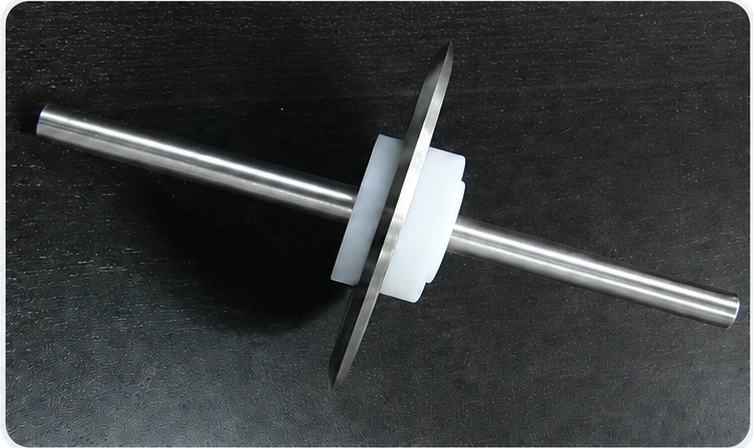
Rotating disc collector

  • Collect narrow aligned fiber ribbons at the disc edge.
  • Series option: approximately Ø180 mm, 1–5000 rpm, with adjustable ribbon width.

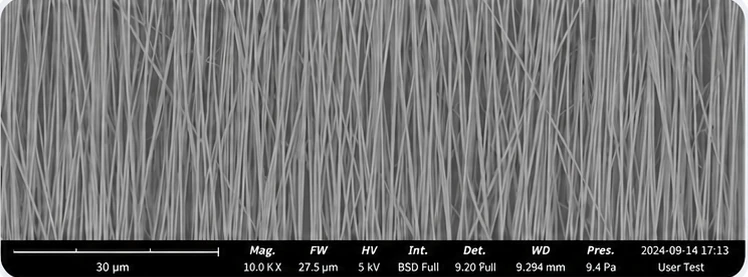
Highly aligned fiber collector

  • High-speed rotation at approximately 1–5000 rpm supports narrow aligned membranes and fiber bundles.
  • Collector geometry is selected for the sample dimensions.

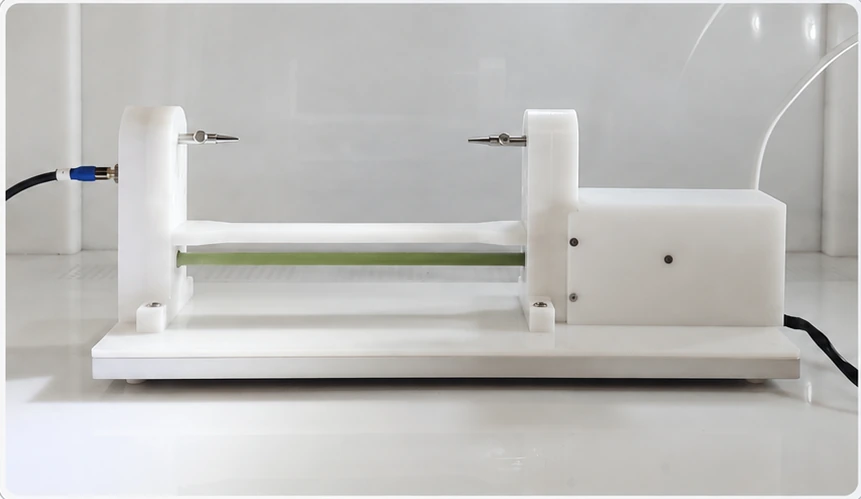
Rotating mandrel collector

  • Mandrel diameters: Ø1–30 mm, with interchangeable lengths and sizes.
  • For vascular grafts, conduits and tubular scaffolds. Fiber diameter and wall thickness depend on the material and deposition process.

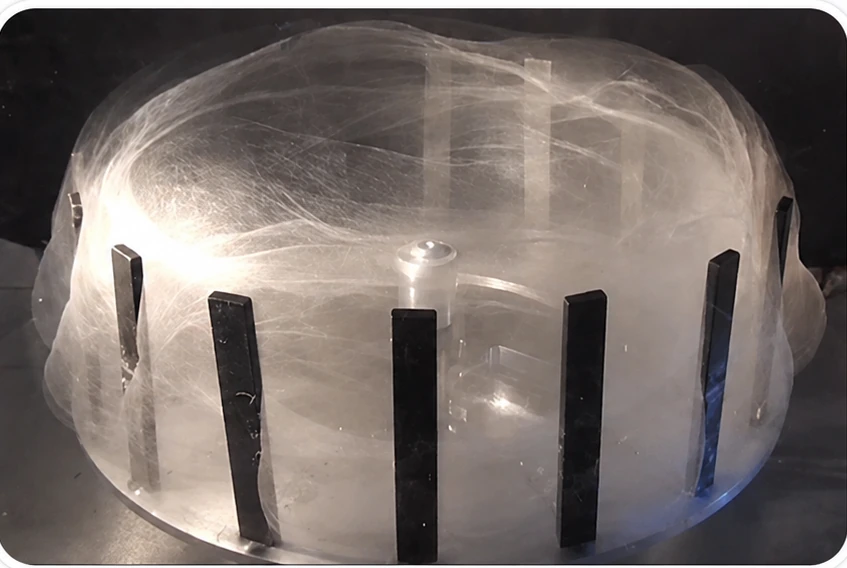
Parallel-electrode cage collector

  • Low-speed rotation at approximately 1–150 rpm for porous aligned fiber layers.
  • Electrode number, spacing and cage dimensions are customizable.
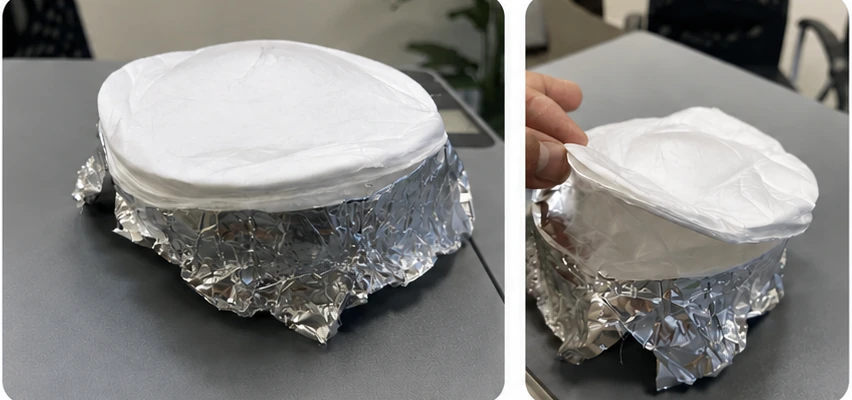
  • Thick collected mats can be opened into flat membranes.

Coordinated X–Y motion

  • Series module: collection area up to 300 × 300 mm, maximum load 20 kg, speed 0–40 mm/s and positioning repeatability <50 μm.
  • CAD and program import support two-dimensional paths and deposition on non-planar substrates.
05

Optional processes

Specialized process modules

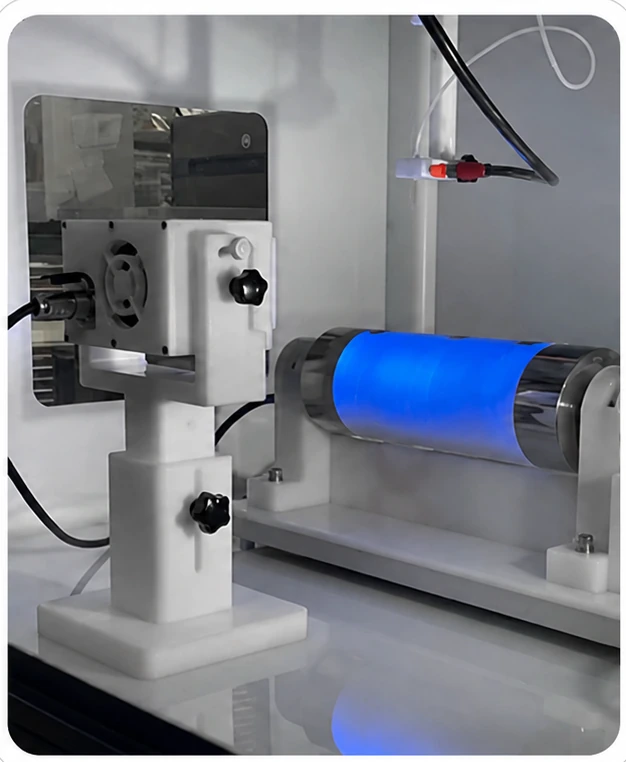
  • Extend the platform with vacuum holding, heated spinnerets, UV curing, microscopy, charge neutralization and specialty collectors.
  • Combine electrospinning with melt electrowriting, ultrasonic spraying, liquid-bath collection or continuous winding as required.

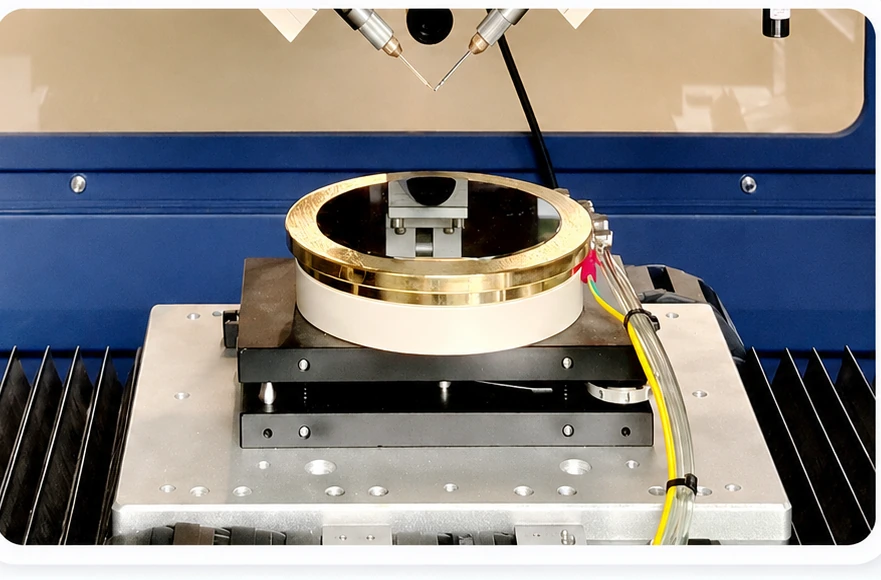
Rotating vacuum chuck

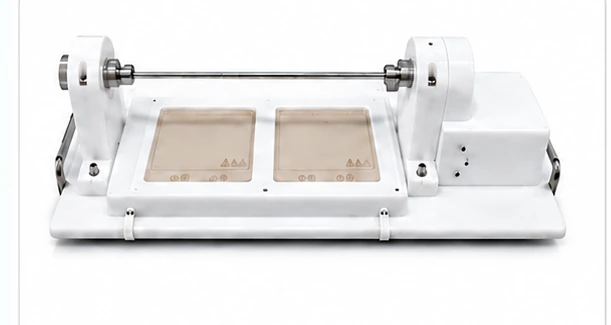
  • For 1–6 inch wafers, glass, PET, PI and metal foils.
  • Two vacuum channels provide independent holding-force adjustment.
  • Fine leveling and adjustable rotation support substrate positioning.

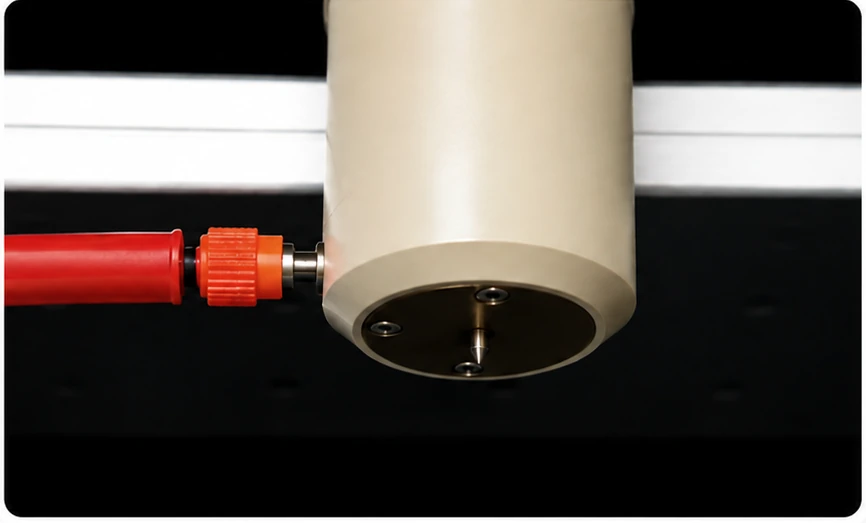
Heated spinneret

  • Ambient to 150°C, positive HV ≤25 kV, for 5 mL glass syringes.
  • For thermally assisted electrospinning and micro/nanoscale writing with compatible materials.

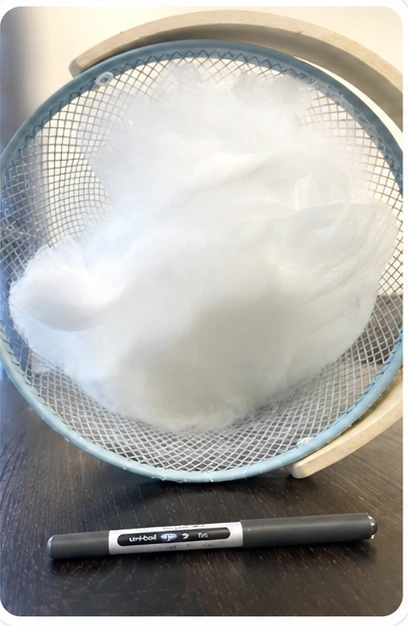
Spiral thick-mat collector

  • Continuous deposition builds thick porous 3D fiber mats.
  • Run time and process settings control thickness while retaining an interconnected fiber network.

Nanoparticle and microsphere collection

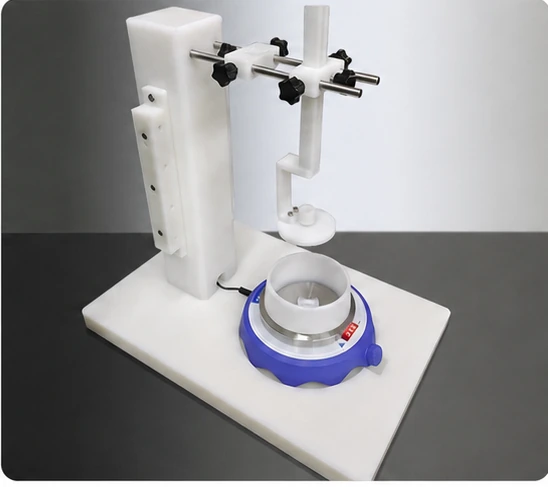
  • Liquid-bath collection with magnetic stirring for particles and short fibers.
  • Bath dimensions, media and auxiliary electrodes can be selected for the sample and process.

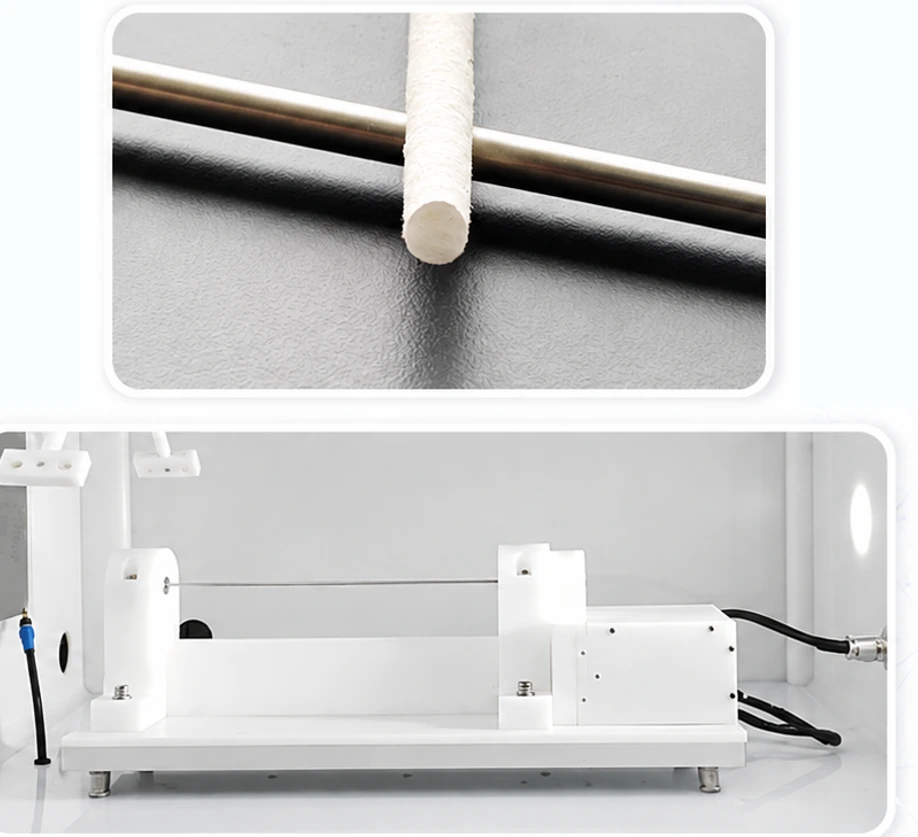
Microfilament nanofiber coating

  • Dual motors rotate filaments approximately 10–1000 μm in diameter.
  • Rotation of approximately 1–5000 rpm supports nanofiber coating on the filament surface.

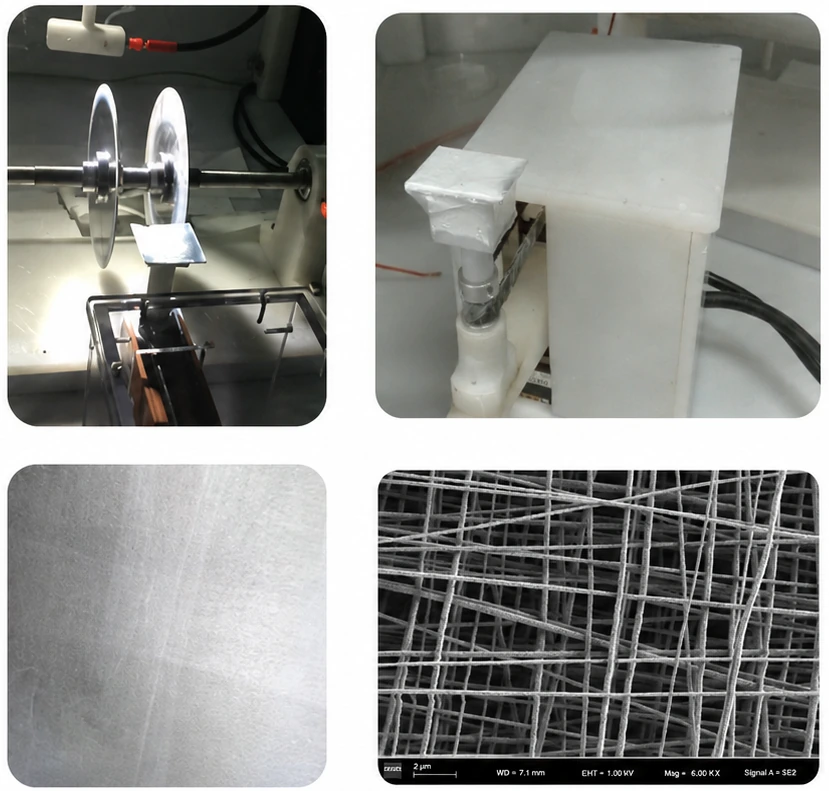
Orthogonal fiber deposition

  • Synchronized twin-disc collection forms alternating 0°/90° layers.
  • Adjust layer count, orientation and fiber spacing for tissue-engineering and composite structures.

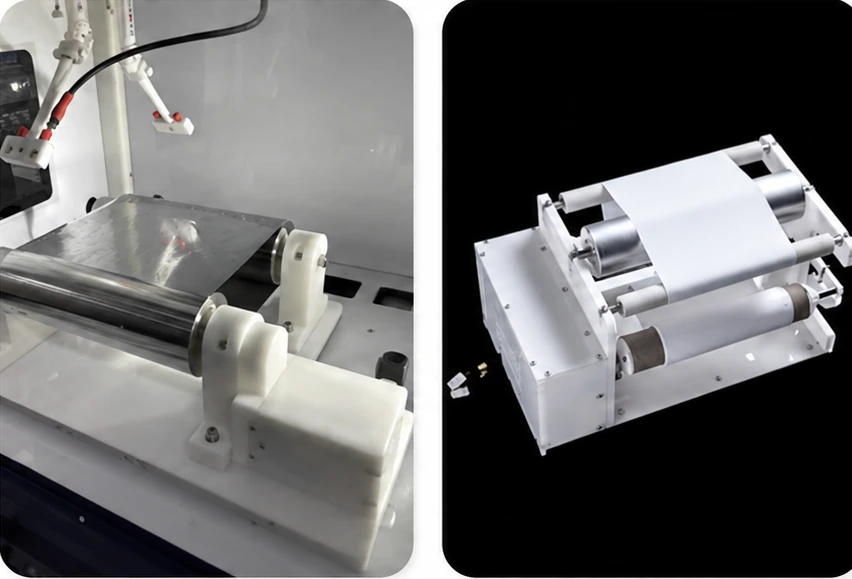
Continuous roll-to-roll collection

  • Series options: approximately 250–500 mm collection width, 50–100 m production length and 1–40 mm/s winding speed.
  • Tension control and preset-length winding support continuous membrane collection. Dimensions depend on the selected system.

Centrifugal electrospinning

  • Combine centrifugal force and an electric field for higher-throughput fiber formation from compatible solutions or melts.
  • Representative spinning disc diameter: approximately 650 mm. Integration requires a suitably sized platform.

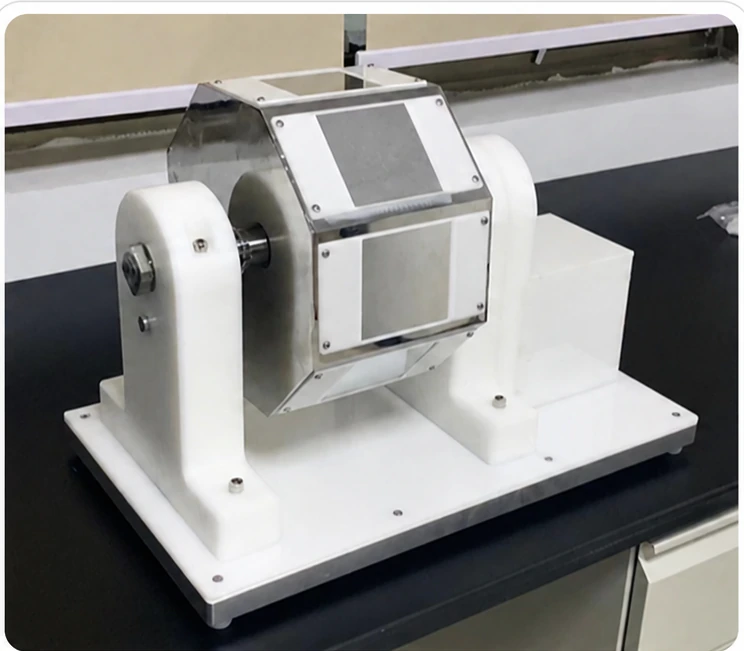
Rotating flat-plate collector

  • Servo rotation: approximately 1–5000 rpm.
  • Representative plate: approximately 80 × 80 × 0.5 mm.
  • Select deposition conditions for random, partially aligned or highly aligned structures.

Microscope imaging

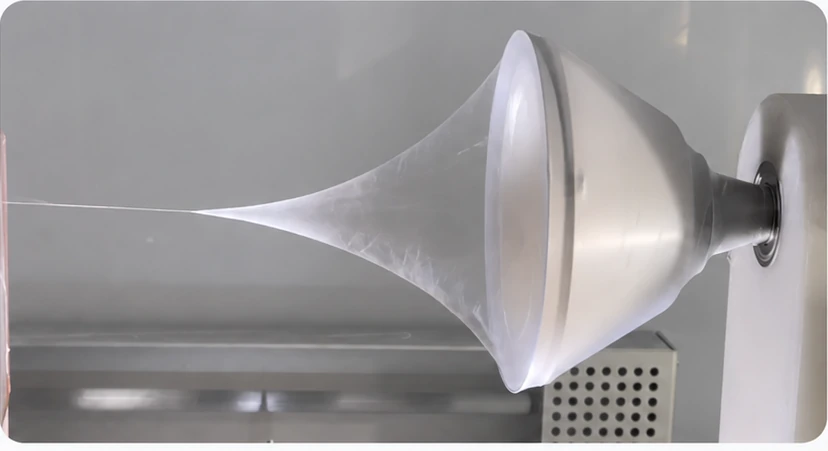
  • A microscope and industrial camera observe droplets, jets and the Taylor cone in real time.
  • Stable positioning relative to the needle supports process observation and adjustment.

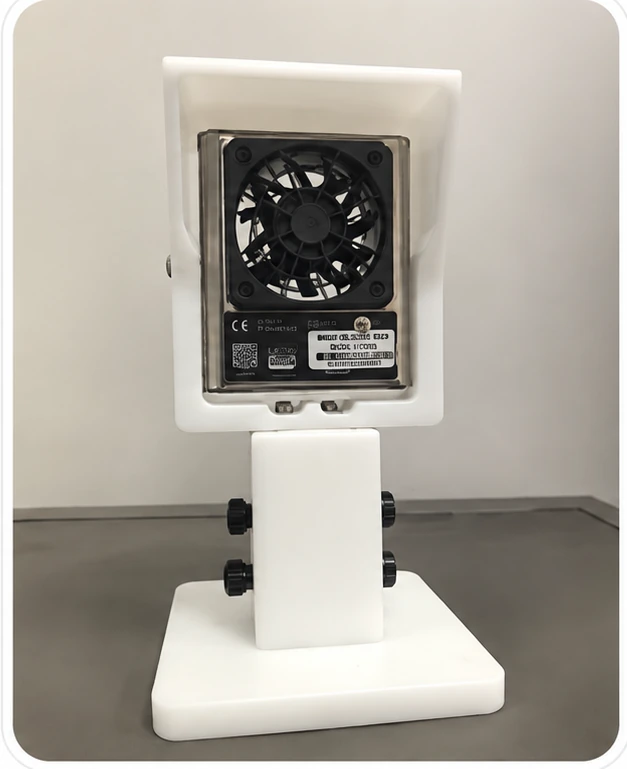
Ionizing air blower

  • Neutralize accumulated charge to reduce fiber adhesion and flyaway fibers.
  • Charge management and auxiliary airflow support more consistent deposition; results depend on process conditions.
06

Safety & customization

Protective functions

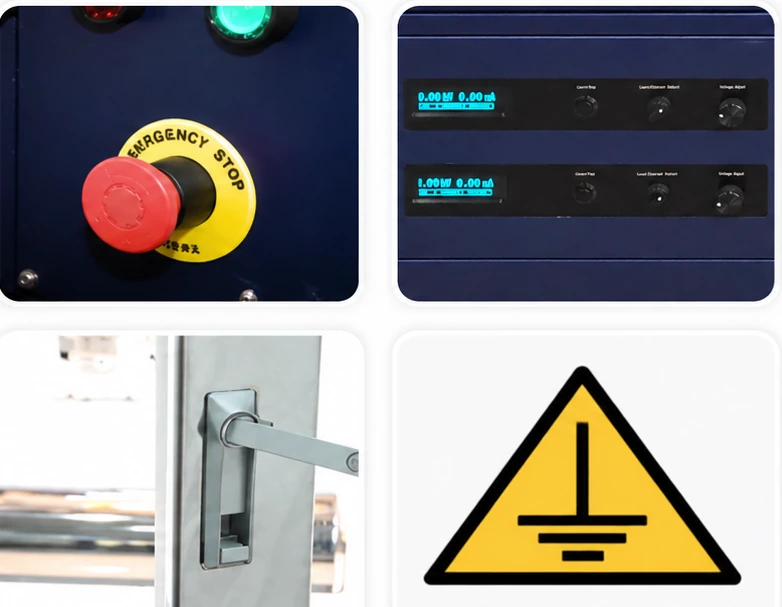
  • Emergency stop and a door interlock shut down high-voltage output when required. The supplies provide overvoltage, overcurrent, arc and short-circuit protection. Multipoint grounding connects the cabinet, HV supplies, syringe pumps and collectors.

Repeatable and traceable processing

  • Clean construction, stable high voltage and modular changeover support biomedical process development.
  • Parameter logging and data management document the process.
  • Grounding, insulation and interlocks form part of the system safety design.

Configure around your application

  • Start with the material system, target fiber structure and process route.
  • Match spinnerets, collectors, motion and environmental control to those requirements.
  • Specify automation, data management and installation interfaces for laboratory work or production.

Tell us what you want to make.

Share your material, target structure and sample size. We can discuss a suitable platform and configuration.

Discuss your application